Claudeforce vs. Copilotforce: An Agentforce Practice Lead's Guide for IT Leaders
Salesforce now meets sellers inside Claude and Microsoft Copilot. Here's what Claudeforce and Copilotforce each include, where Agentforce still fits, and what IT leaders should do first.
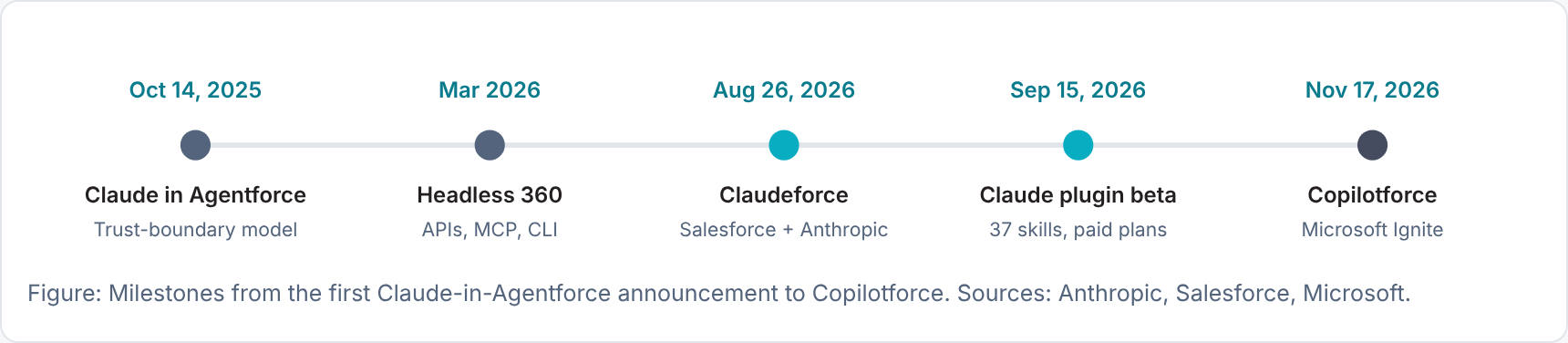
For twenty years Salesforce asked customers to bring their data into one platform and work there. In 2026 it began meeting people elsewhere. The Headless 360 effort, announced in March, exposes APIs, MCP servers and command-line tools so agents can reach Salesforce data and workflows without its screens. Two partnerships turn that idea into products.
Claudeforce (Anthropic, August 26) and Copilotforce (Microsoft, November 17) take it to the two assistants most likely to be open on an employee's desktop. We hear the same questions weekly: do these replace Agentforce, compete with it, or sit beside it? This post answers them for VPs and Directors of IT.
Both plugins are pre-GA. Facts here come from Salesforce, Anthropic, Microsoft and trade and analyst reporting as of mid-November 2026. Confirm specifics with each vendor before you commit.
What each partnership includes
Claudeforce (Salesforce and Anthropic)
Salesforce in Claude: a plugin built with Salesforce, with 37 skills for account research, call prep, pipeline review and CRM updates. It bundles the Salesforce and Slack connectors and a setup skill that learns each user's role. Beta since September 15 on paid Claude plans for organizations Salesforce approves, in Claude chat and Cowork on web and desktop.
Claude in Agentforce: Claude is a reasoning model for the Atlas Reasoning Engine, powers Agentforce Vibes and Agentforce Coworker by default, and is available in Agent Builder. Anthropic first announced Claude as a preferred model in Agentforce in October 2025, with traffic kept inside Salesforce's trust boundary.
Claude in Slack and engineering: default model for Slack AI and Slackbot, a launch partner for Slack Code, and Claude Code across Salesforce engineering.
Copilotforce (Salesforce and Microsoft)
Salesforce in Copilot (public preview): a plugin with 38+ sales skills, grouped around growing revenue, managing risk and moving faster, grounded by Microsoft Work IQ.
Sales Cloud in Teams (pilot; open beta later in 2026): pipeline and quota views, deal notifications and briefings, with Agentforce Coworker as the action layer.
Data 360 and Fabric (federation GA; sharing in public preview): federation of OneLake data into Data 360, and a shortcut sharing curated Data 360 data into OneLake, without copying.
Accenture is design and implementation partner and "customer zero," with more than 740,000 Copilot users and 55,000 Salesforce users in scope.
User experience: similarities and differences
Similarities:
Conversation replaces navigation. A seller asks a question and gets a grounded answer instead of clicking through records and reports.
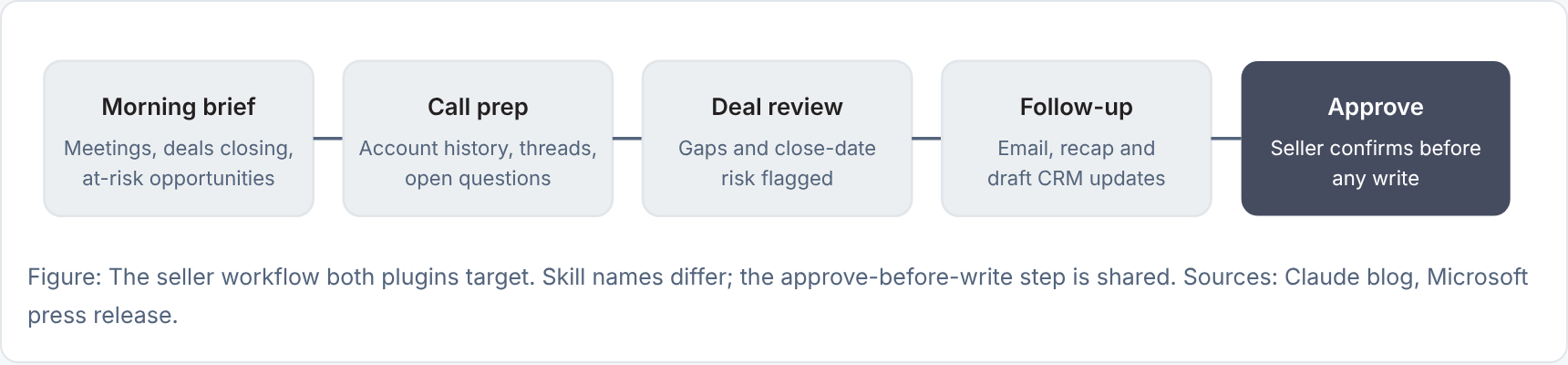
Packaged sales workflows. Both ship skills for the jobs sellers repeat: call prep, deal review, pipeline review, follow-up and renewal risk.
People stay in control of writes. In both products a proposed CRM change waits for the seller's approval, and Salesforce validation rules still apply.
Differences:
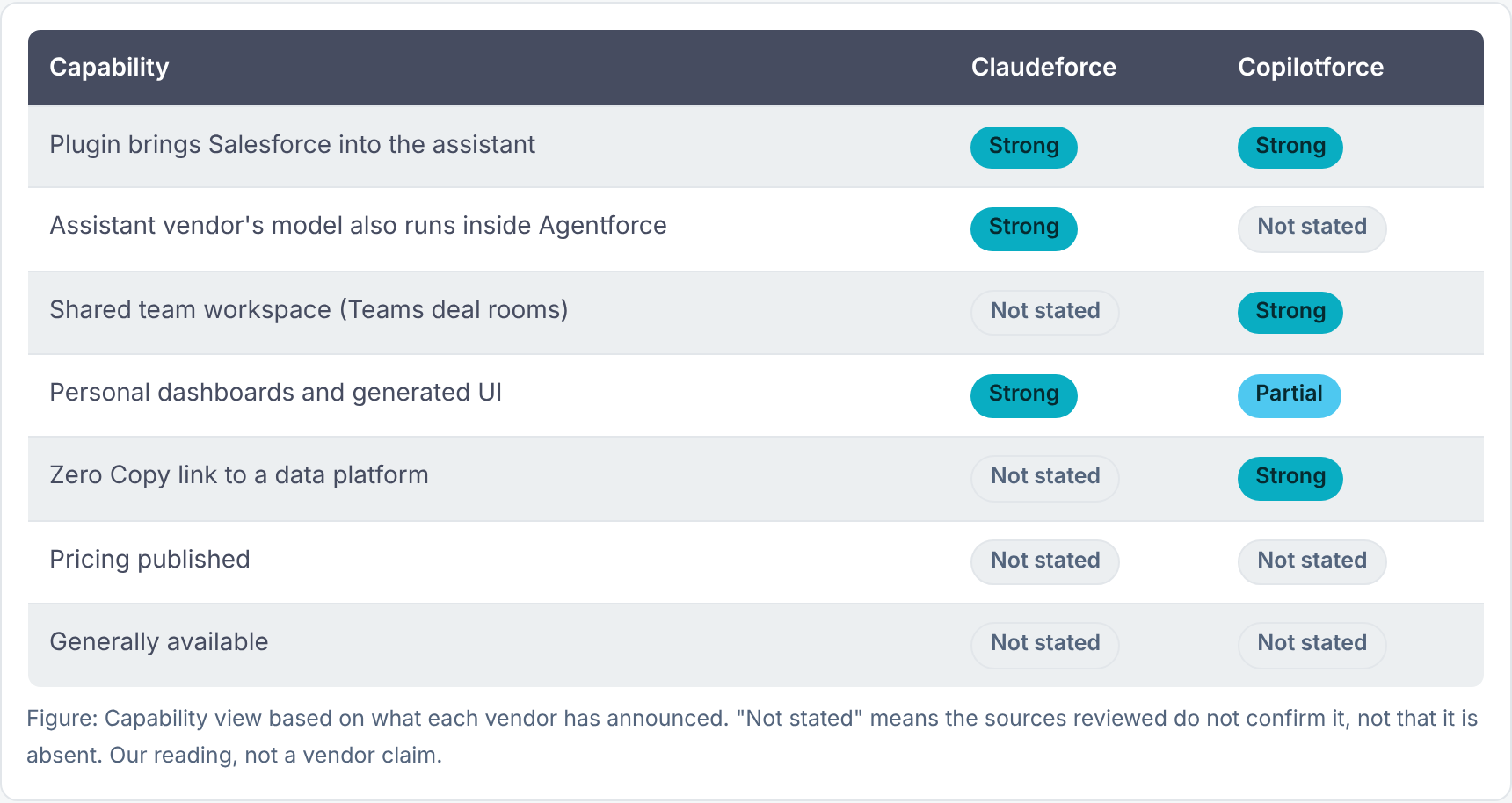
Personal analyst or team workspace. The Claude plugin builds a personalized morning brief, scores deals against the team's methodology, drafts a business case and a dated close plan, and generates an interactive pipeline dashboard. Customers named by Anthropic include GitLab, Siemens and Legora. Copilotforce works through the Microsoft work graph: Work IQ draws on Teams meetings, Outlook email and SharePoint and OneDrive files, and deal context can feed proposals in Word and PowerPoint. Sales Cloud in Teams adds a shared surface for pipeline, quota and deal notifications.
Where the seller sits. Claudeforce meets sellers in Claude. Copilotforce meets them in the Microsoft 365 apps they already have open, which usually lowers change-management effort in Microsoft-standardized companies.
Technical similarities and differences
Similarities:
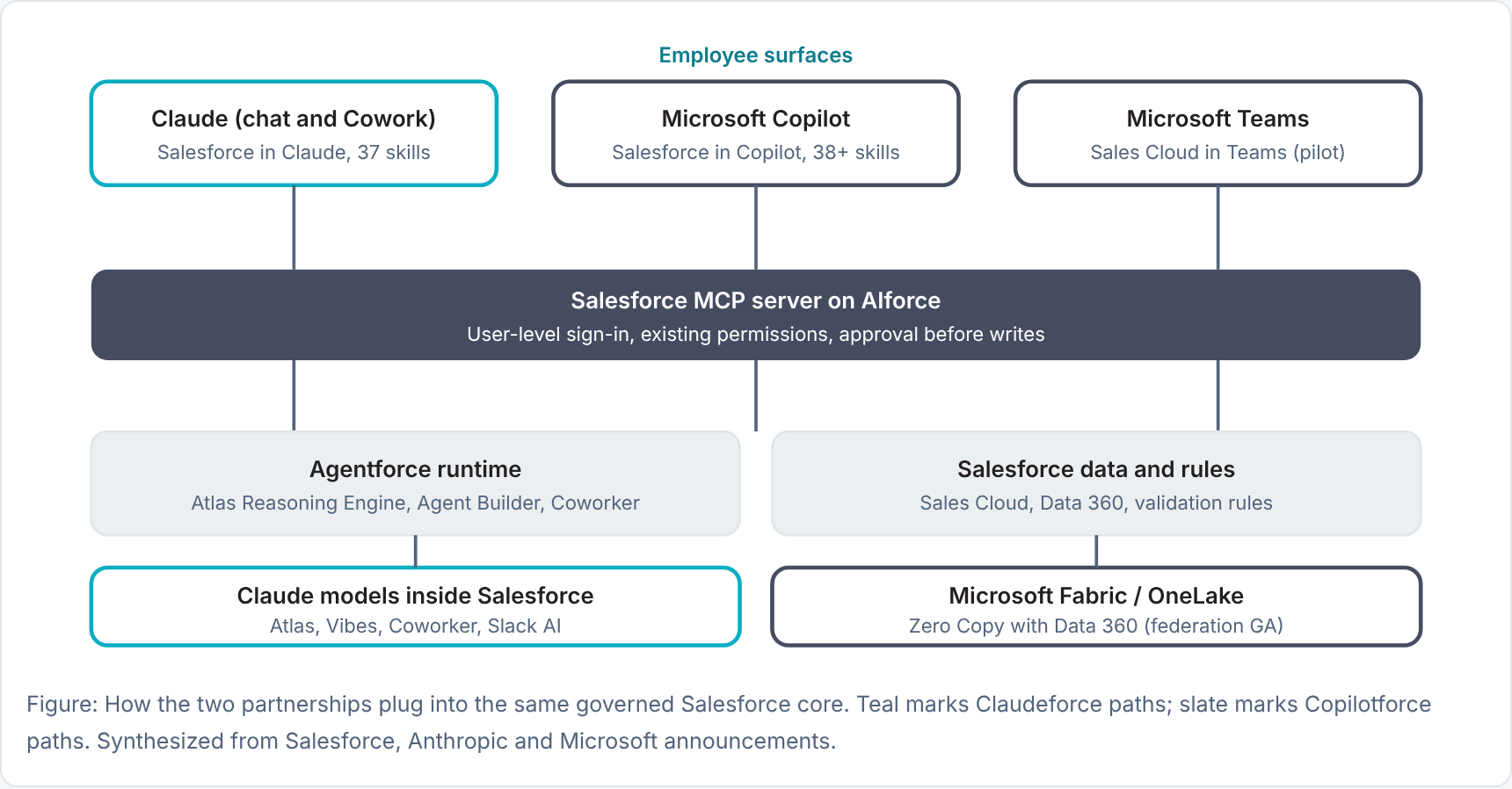
MCP is the plumbing. Microsoft describes authenticated Salesforce MCP access in Copilot, and Salesforce says its AIforce harness serves agents through MCP servers, APIs and CLI tools. Anthropic's admin guide has the same MCP server connected once for the organization. For architects, that means one governed integration surface.
User-level identity. Claude acts as each user's own Salesforce account. Copilot works within existing Salesforce permissions. Existing profiles, permission sets and sharing rules decide what the assistant can see, which is a strength and a warning.
Write controls. Claude asks the user to approve each proposed change by default. Copilotforce requires explicit confirmation for CRM writeback and follows existing validation rules.
Differences:
Architecture direction. Claudeforce is two-way: Salesforce in Claude, and Claude inside Atlas, Vibes, Coworker and Slack. Copilotforce mostly brings Salesforce into Copilot, Teams and Fabric.
Reasoning. Claude can reason inside Agentforce itself. Copilot reasons at the front end, while Agentforce Coworker handles actions in Teams.
Context layer. Claudeforce bundles Salesforce and Slack connectors, plus other Claude connectors. Copilotforce uses Microsoft Work IQ over Teams, Outlook, SharePoint and OneDrive.
Data platform. Claudeforce uses MCP and API access to org data. Copilotforce adds Zero Copy between Data 360 and Fabric OneLake.
Setup and requirements. For Claudeforce, a Salesforce admin requests access through AgentExchange, a Claude admin installs the plugin and connector, and Sales Cloud Enterprise Edition is required. Copilotforce is in public preview through AgentExchange and the Microsoft plugin directory.
Commercial model. Claudeforce uses consumption pricing for headless access from Salesforce, with Claude bought separately from Anthropic; Salesforce's Patrick Stokes told VentureBeat you cannot buy it on one piece of paper today. Copilotforce has no published pricing, and Salesforce says packaging is subject to change.
Where Agentforce fits
A common misreading says these announcements make Agentforce redundant. Salesforce's own framing says otherwise. Stokes told VentureBeat that Agentforce targets autonomous and customer-facing work, while Salesforce in Claude supports a seller's daily tasks. Copilotforce follows the same split, with Agentforce Coworker behind the actions in Teams.
Employee surfaces: Claude, Microsoft Copilot, Teams. A person asks, the assistant retrieves and drafts, the person approves.
Agent runtime: Agentforce, Atlas Reasoning Engine, Agent Builder. Agents run processes and serve customers within guardrails.
Governed foundation: Salesforce data, permissions, business rules and Data 360, with Fabric federation if you use Microsoft.
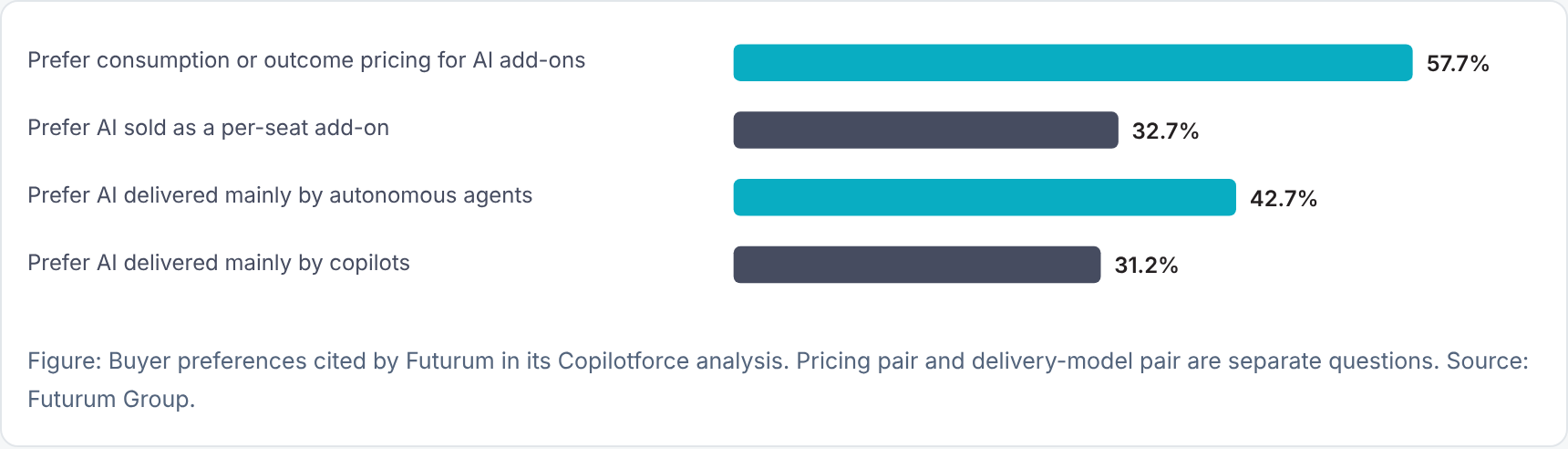
The foundation is where Salesforce now earns its place. Futurum makes the same point: if sellers work mainly in Copilot, Salesforce has to justify its fees through data, rules and actions rather than screens.
Risks and open questions
Over-permissioned orgs. A user with broad access gives the assistant the same reach. Narrow it before a pilot.
Paying twice. Futurum notes that companies licensing both Microsoft 365 Copilot and Agentforce must decide which assistant handles which job.
Seat economics. A Salesforce seat used mainly to feed another vendor's assistant gets harder to defend at renewal.
Two contracts. Claude inference comes from Anthropic, and Salesforce data in Copilot falls under your Microsoft agreement once it leaves Salesforce. Involve legal and procurement early.
Early products. Both are beta or preview. Salesforce in Claude is limited to approved organizations on Sales Cloud Enterprise Edition and works in chat and Cowork. Outlook, Word and Excel integration for Copilot is described as coming later.
Unproven outcomes. Adoption figures and customer quotes are vendor-provided. Accenture's rollout should become the first large proof point, if hard numbers are published.
Recommendations for VPs of IT and IT Directors
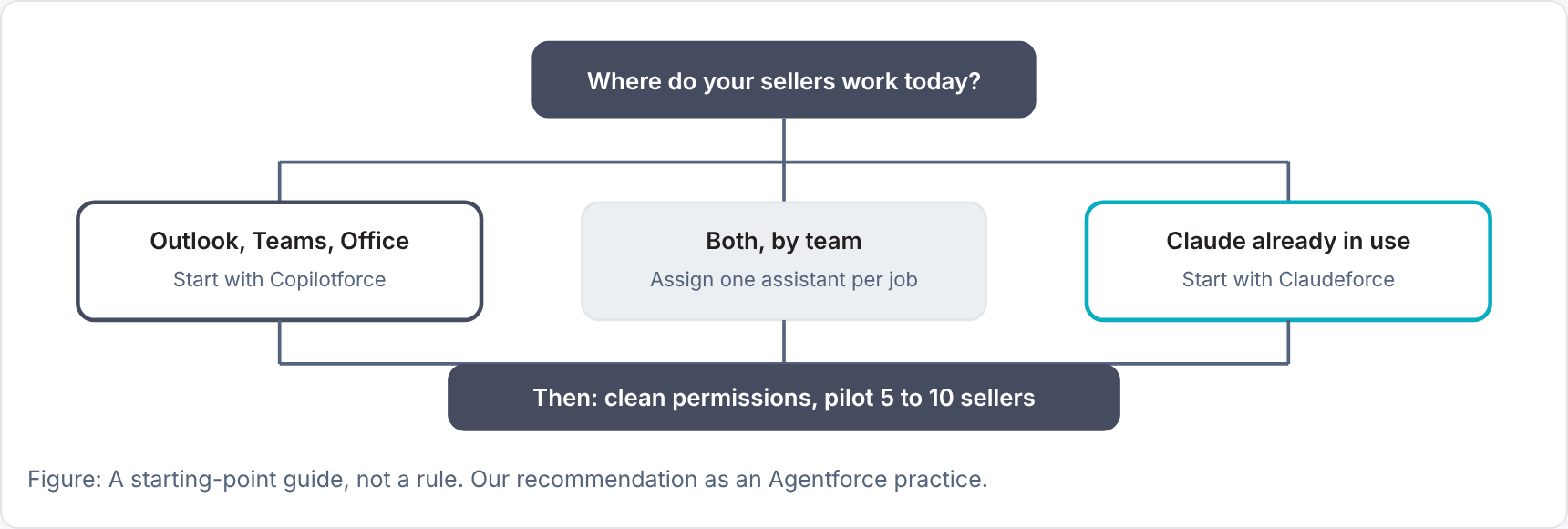
Decide by workflow gravity. Count where sellers spend the day. Microsoft-standardized teams start with Copilotforce. Claude-first or Agentforce-heavy teams start with Claudeforce. Avoid running both in one team without a division of labor.
Run a permissions sprint. Review profiles, permission sets and sharing rules, and remove broad access. It is the highest-value, lowest-regret step.
Pilot against a baseline. Start with five to ten sellers in a sandbox. Measure prep time, follow-up speed, forecast accuracy and renewal-risk detection. Expand on evidence.
Keep write approvals on. Both products ask for approval by default. Make any relaxation a deliberate policy choice.
Put commercials in writing. Ask Salesforce how consumption pricing applies, review Microsoft and Anthropic data terms, and model total cost across contracts.
Invest in the foundation. Clean data, Data 360 readiness and strong business rules improve every front end.
The strategic point: Salesforce is becoming a governed platform that many assistants plug into. Your advantage comes from matching surface to audience and keeping the foundation clean, not from betting on one logo.
Accellor's Agentforce practice runs readiness assessments, permission clean-ups and measured pilots across Agentforce, Claudeforce and Copilotforce. Get in touch to plan yours.
Sources
We limited this article to vendor primary sources and established trade or analyst outlets. Links were checked in November 2026. Vendor documents describe beta products and may change.